
FUE : : Technical Adaptations in Asian Hair
Specialized surgical adaptations for distinct ethnic follicular anatomy.
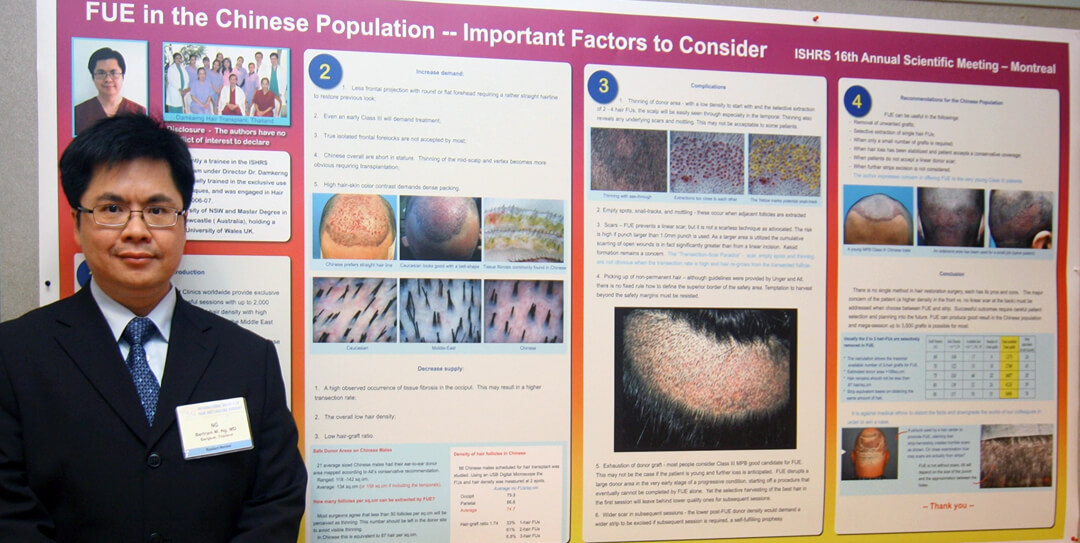
What Are the Unique Challenges of FUE in Asian Hair?
The global FUE technique was initially developed and refined primarily on Caucasian hair. When applied directly to East Asian patients without modification, significant clinical challenges arise due to fundamental anatomical differences.
Critical Anatomical Factors
- Thicker Hair Shafts: Asian hair typically has a larger diameter, requiring careful punch size selection to avoid excessive collateral damage to surrounding tissue.
- Subcutaneous Curvature: Follicles often exhibit a hidden "J-hook" or "S-shape" curvature beneath the skin surface. If the punch is not aligned perfectly with this curve, the risk of transecting (cutting) the follicle increases dramatically.
- Denser Scalp Tissue: The dermal layer in Asian scalps is often denser and offers more resistance, demanding specialized motor settings, sharper instruments, and precise extraction angles.
- Aesthetic Standards: Goals for hairline design and density often differ, requiring a tailored aesthetic approach that respects ethnic facial proportions.
These factors necessitate a specialized approach to ensure high graft survival and natural aesthetics.
How Was the Technique Adapted for Asian Patients?
The evolution of FUE for Asian populations involved a period of critical analysis and methodical refinement. Early applications of European protocols revealed significant limitations, including low graft survival and poor yield.
The Path to Innovation
- Recognition of Limitations (2006–2007): Initial attempts using standard techniques resulted in suboptimal outcomes, prompting a temporary pause in FUE services to focus on research and development.
- Dedicated Research (2007–2008): Extensive study into Asian follicular anatomy identified the root causes of graft transection, leading to the adaptation of instrumentation and extraction methods.
- Publication & Validation (2009 Onward): The modified methodology was documented and published in peer-reviewed international journals (e.g., Hair Transplant Forum International). This work established a foundational reference for performing FUE in Chinese and East Asian populations, guiding other surgeons to avoid similar pitfalls.
This rigorous process transformed early challenges into a refined, high-precision surgical protocol known today as High-Density (HD) FUE for Asian hair.
What Is the Specialized 5-Step Extraction Approach?
To overcome the high transection risks associated with curved Asian follicles, a systematic 5-step approach is employed. This method prioritizes precision over speed.
Step 1: Indentation
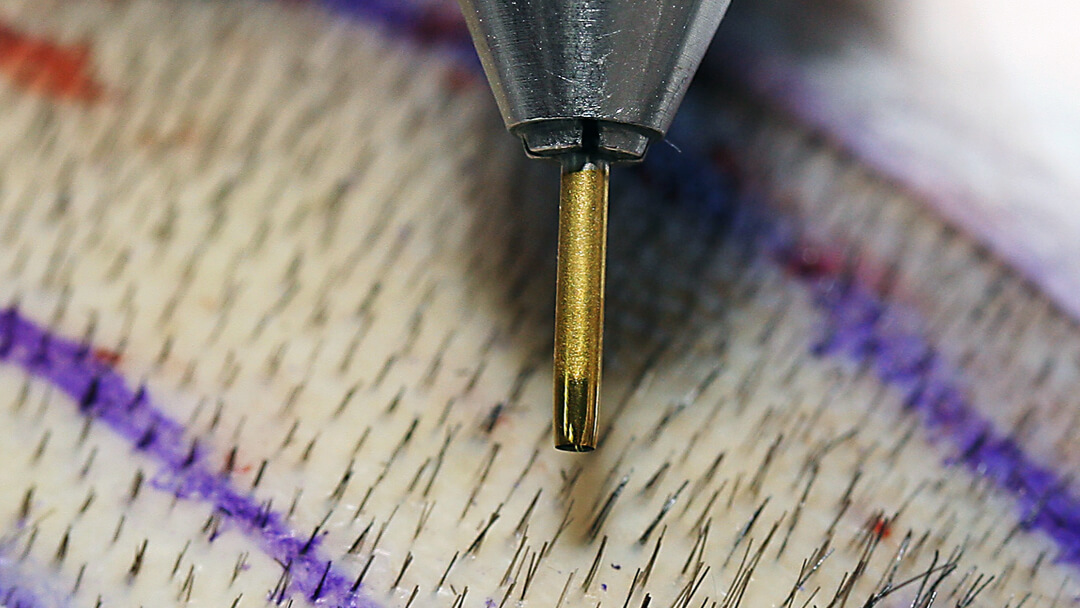
The sharp punch tip is secured on the skin surface to prevent slipping. By pushing downward vertically, an indentation is created that embraces the punch, stabilizing it before scoring begins.
Step 2: Sharp Scoring
The punch angle is aligned with the hair shaft. The handle is rotated gently to advance the punch until tissue resistance is felt (usually at the arrector pili muscle). Scoring stops here to avoid dropping too deep and transecting the root.
Step 3: Test Extraction
Using curved forceps, the graft is gently grasped. If "de-capping" occurs (skin only is removed), a double-forceps technique is used: one pair lifts the follicle while a second pair grasps lower to extract the intact graft.
Steps 4 & 5: Deep Dissection
If the graft remains tethered, a dull punch, sharp needle, or the same punch (with less force) is used to free the follicle from deep connective tissue before a final re-extraction attempt.
Note: A learning curve exists for each patient. The first 15–30 minutes are often dedicated to testing the proper angle, direction, and depth specific to that individual's scalp.
What Are the Considerations for Mega-Sessions in Asian Patients?
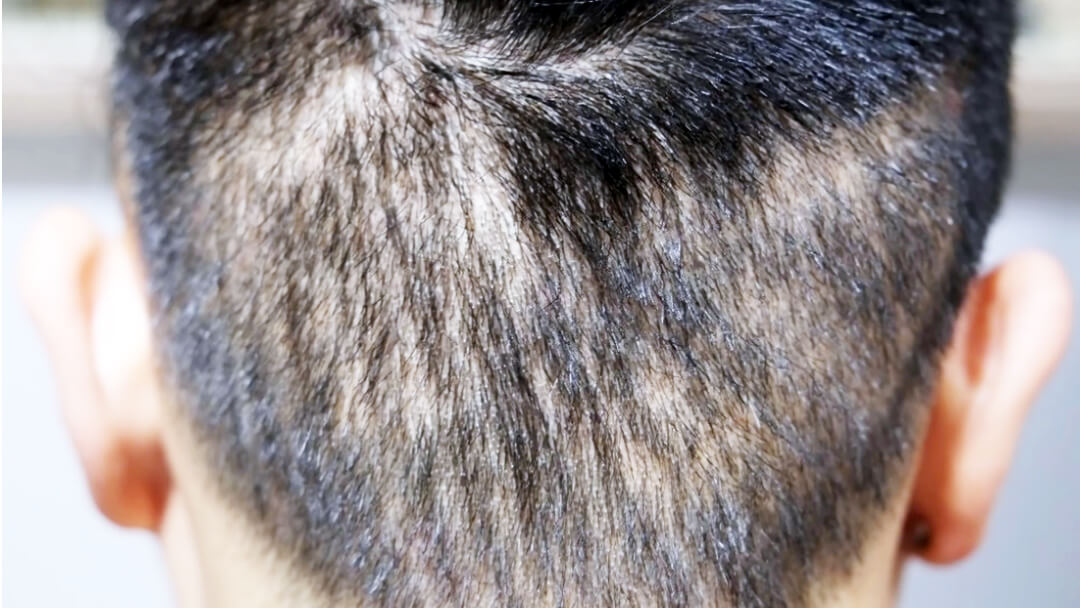
In many Asian subgroups (e.g., Chinese, Japanese, Thai), a discrepancy often exists between high aesthetic demand and lower native donor density. This dynamic requires careful ethical and surgical management.
Risks of Over-Harvesting
- Visible Thinning: Extracting too many grafts per square centimeter in a low-density donor area can lead to visible "snail-tracks," mottling, or empty spots, which are particularly noticeable due to the high contrast between dark hair and light scalp.
- Unsafe Zone Harvesting: Expanding the harvesting area beyond the "safe margins" risks picking up non-permanent hair that will eventually fall out.
- Cumulative Scarring: While FUE avoids a linear scar, widespread micro-scarring from over-harvesting can render the donor area unusable for future strip surgeries if needed.
Strategic Planning
Successful outcomes depend on realistic goal setting. Surgeons must calculate the hair-to-graft ratio and total available supply carefully. In cases of limited donor reserve, prioritizing the frontal hairline and core coverage is often more sustainable than attempting full crown density in a single session.
Key Principles of Ethnic-Specific FUE
- Anatomical Distinction: Asian hair follicles are typically thicker, curlier beneath the skin, and embedded in denser tissue compared to Caucasian counterparts.
- High Transection Risk: Standard "blind" extraction techniques result in unacceptably high graft damage rates in Asian patients without specific modifications.
- Instrumentation Matters: Success requires smaller punch sizes (0.75–0.8mm for single hairs) and specialized handles for depth control and debris clearance.
- Methodical Extraction: A 5-step approach (Indentation → Scoring → Test Extraction → Deep Dissection → Re-extraction) is essential to navigate subcutaneous curves safely.
- Donor Conservation: Due to generally lower donor density in some Asian subgroups, meticulous planning is required to prevent visible thinning or "moth-eaten" donor areas.
Historical Reference: Published Methodology
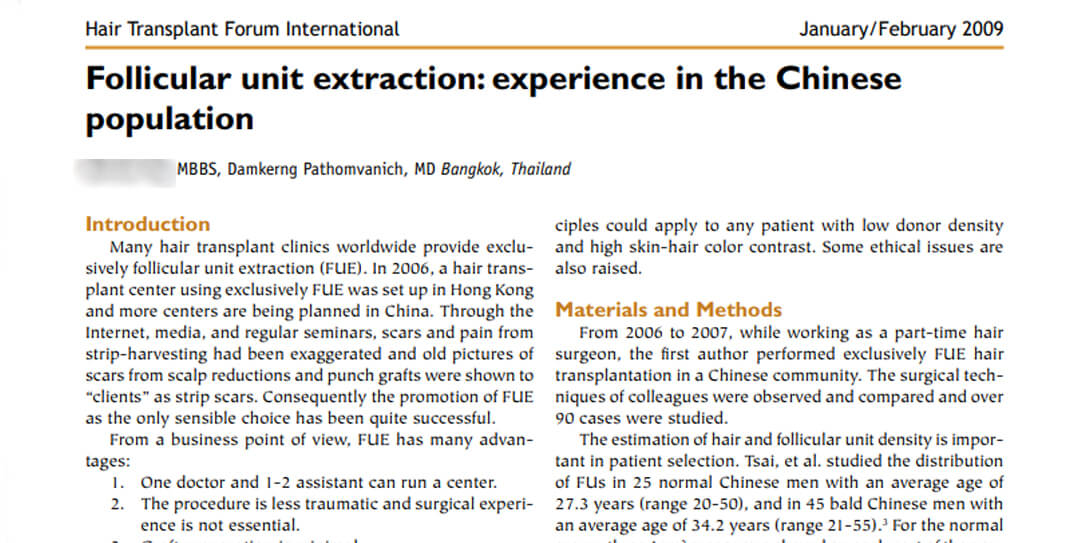
The following insights are derived from the seminal paper: "Follicular Unit Extraction: Experience in the Chinese Population" (ISHRS Forum International, Vol 19:1, Jan/Feb 2009). This work marked a pivotal shift in regional surgical standards.
Instrumentation Insights
- Punches of 0.8mm are reserved for single-hair units; 1.0mm for multi-hair grafts.
- Vari-handles are preferred for depth control and debris clearance.
- Curved forceps provide better grip and reduce trauma during extraction.
Preoperative Protocols
- Grey/white hair should be colored pre-op for visibility.
- Donor area trimming to 0.3–0.5cm aids punch guidance.
- Tumescence is used selectively, not routinely, to avoid tissue distortion.