
20 Years: From Innovation to 4G FUE Protocol
Clinical evolution of hair restoration techniques over two decades.
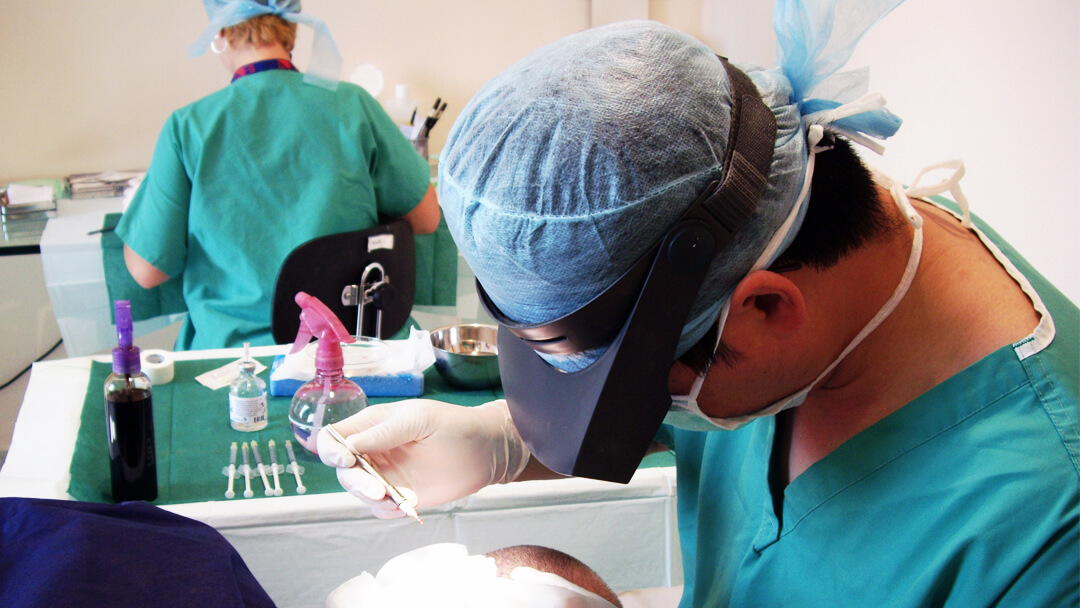
Performing Our first FUE procedure in Greece, 2006
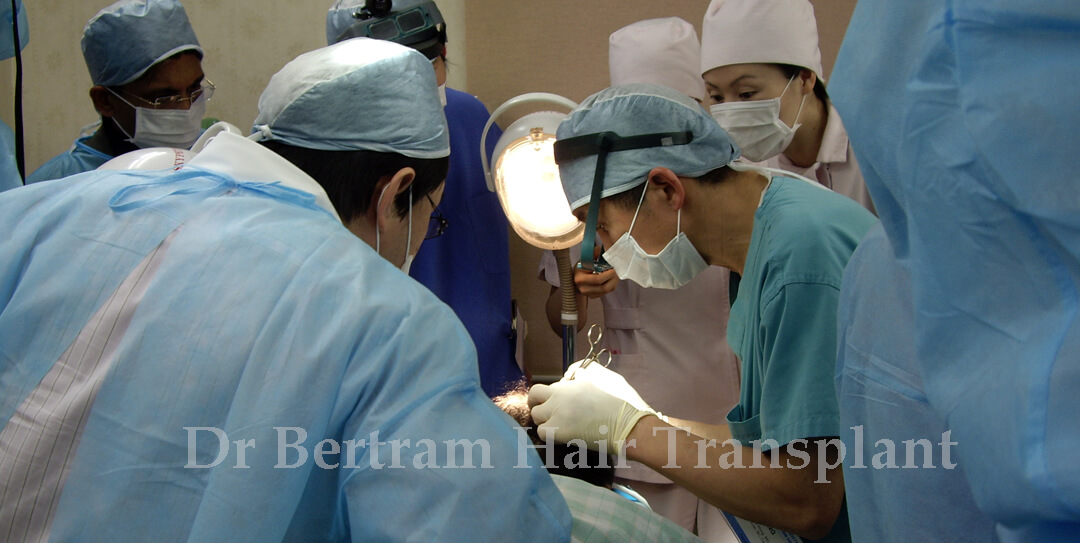
Attending ISHRS Asian Workshop in Yokohama, Japan, 2007
Clinical protocols develop over time through experience and observation. Beginning in 2006, standard techniques were observed to have limitations when applied to Asian hair types. Over the following years, these observations led to refinements that eventually consolidated into the four components of the 4G approach.
Component 1
Treatment Planning
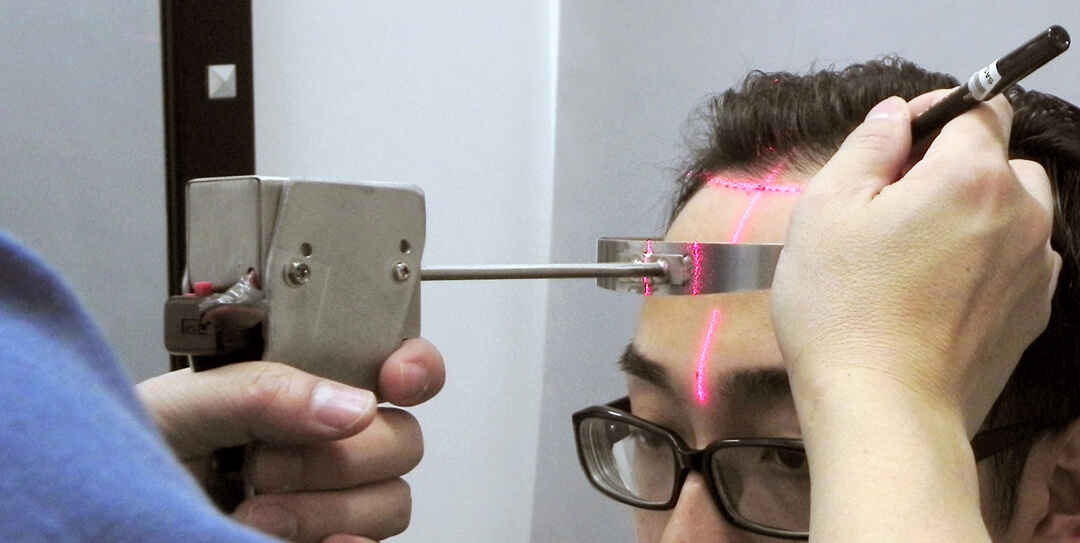
Handheld laser device for hairline placement, 2008
Observations and clinical developments:
- 2008 — Laser device: Development of handheld laser hairline placement device for symmetry.
- 2012 — Key Area Transplant (KAT): Strategic density allocation focusing on frontal frame.
- 2014 — Female Hairline Extension: Technique for restoring feminine facial proportions.
4G approach: Lifetime graft budgeting, laser-guided design.
Component 2
Graft Extraction
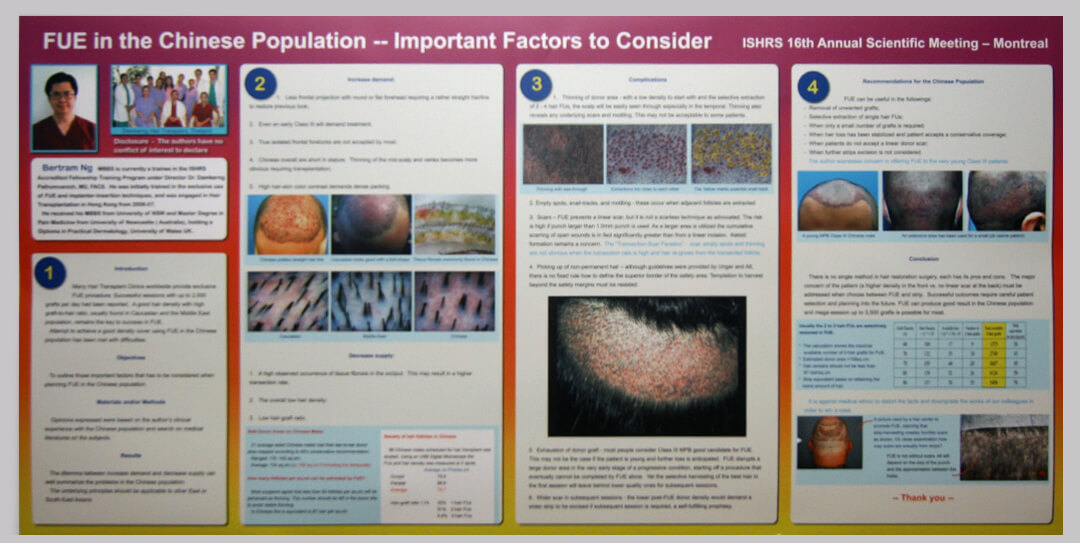
Published article on FUE in Chinese population, 2009
Observations and clinical developments:
- 2006 — Asian hair characteristics: Identified limitations of standard tools on curved follicles.
- 2008 — Sequential FUE: Workflow to minimize out-of-body time.
- 2022 — COMBO FUE+FUT: Combined approach to maximize yield without over-harvesting.
- 2023 — Non-Shaven FUT: Extraction without visible shaving.
4G approach: Sequential extraction with specialized punches.
Component 3
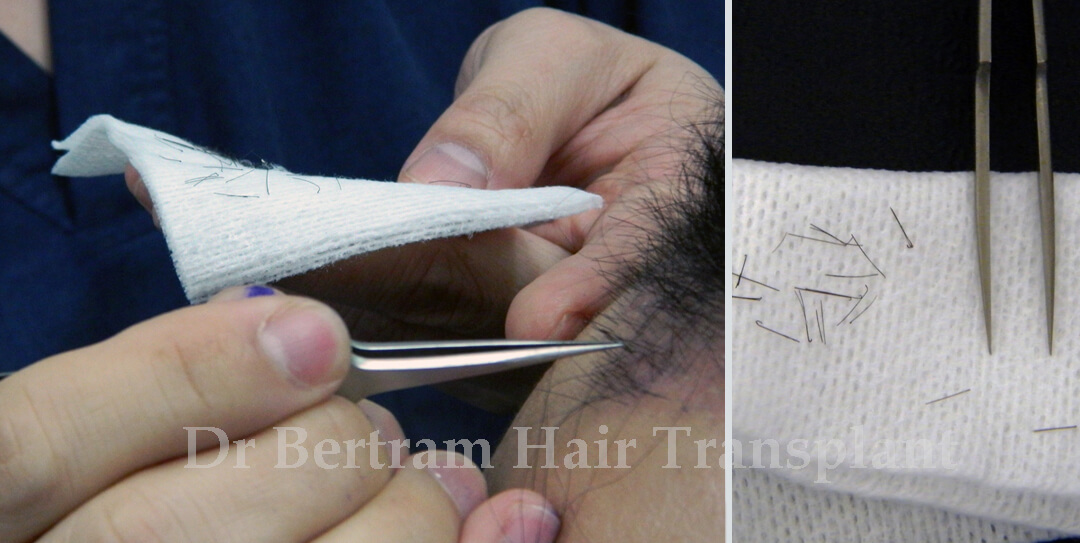
Graft Storage and Aftercare
Post-procedure care protocol, 2013
Observations and clinical developments:
- 2012 — Folliculitis management: Identified as inflammatory response; adjusted antibiotic protocols.
- 2017 — Room-temperature storage: Liposomal ATP with room-temperature storage.
- 2017 — Swelling management: Protocol to minimize post-procedural edema.
4G approach: Physiologic graft storage and supportive aftercare.
Component 4
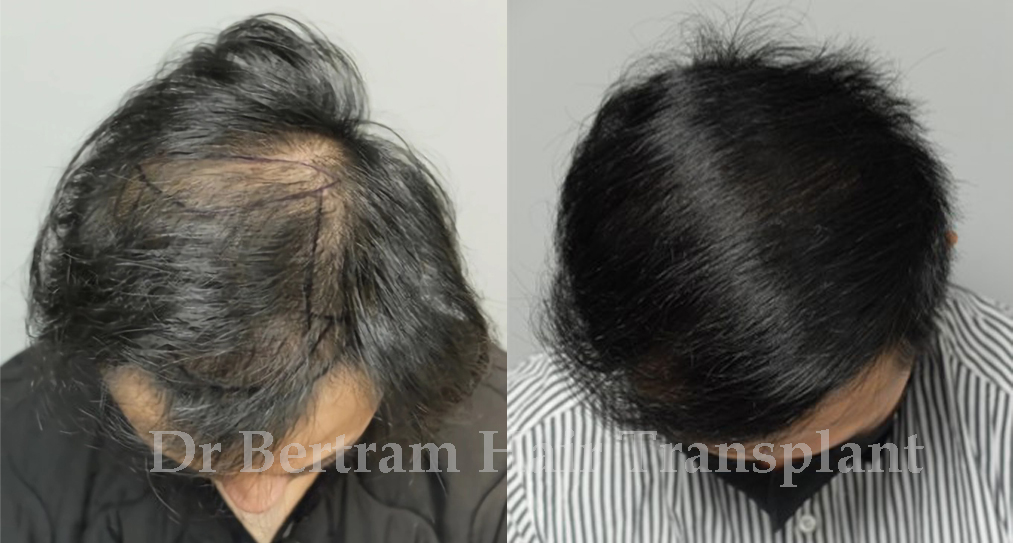
Aesthetic Design
Key Area Transplant protocol
Observations and clinical developments:
- 2008 — Post-procedural shedding: Identified and characterized temporary shedding patterns.
- 2012 — KAT Strategy: Strategic density allocation for visual impact.
- 2014 — Gender-specific design: Customized approach for female patients.
4G approach: Strategic resource allocation for natural appearance.
Clinical Contributions
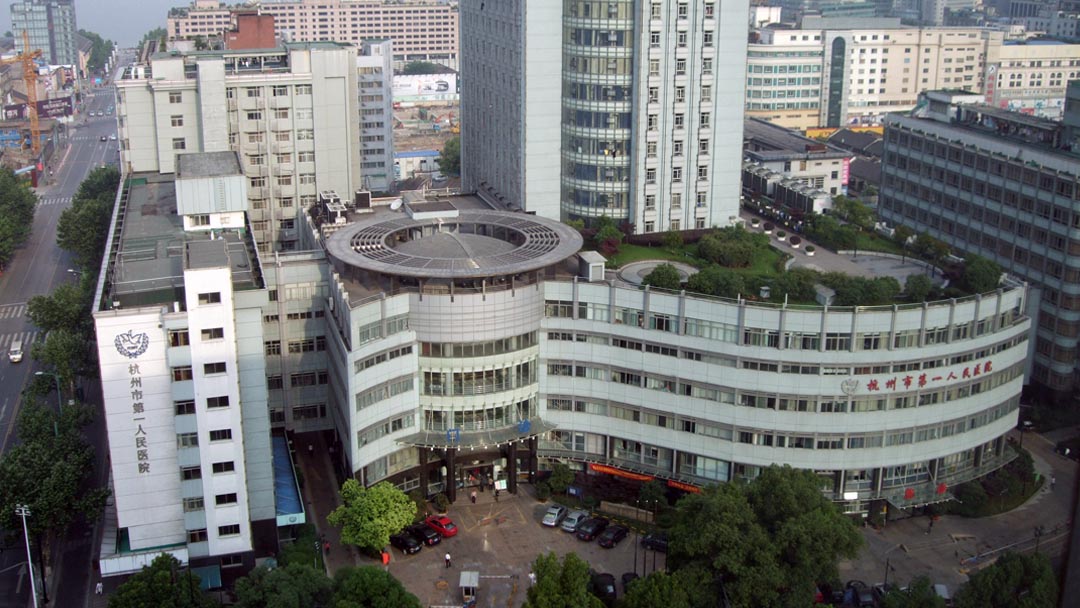
Invited demonstration of FUE technique in China, 2010
Ongoing Clinical Development
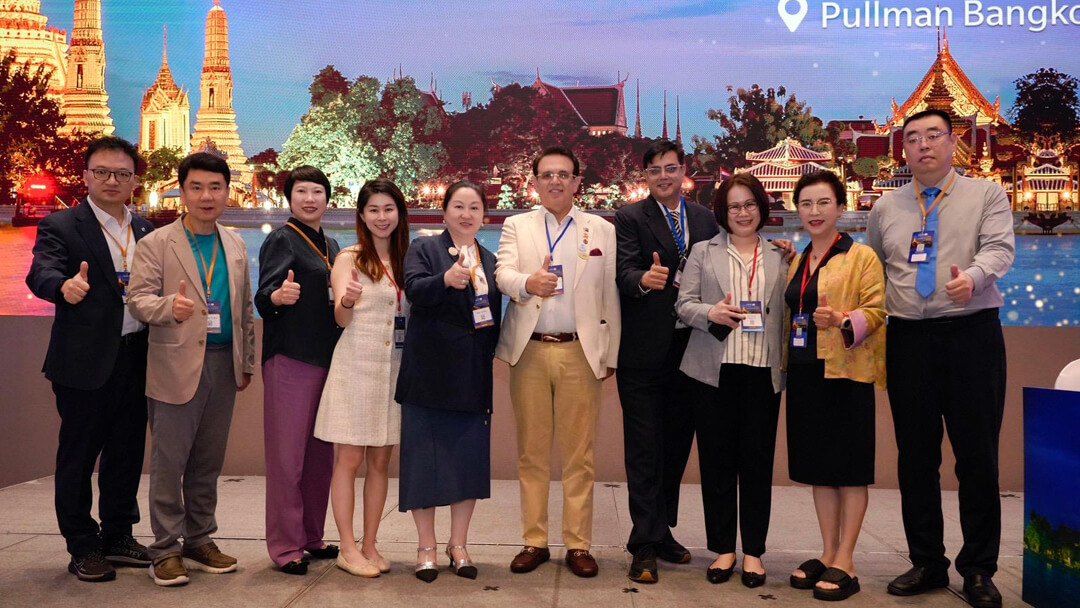
Continuing education at international conferences
The 4G protocol represents the current summary of clinical experience. As new observations arise, techniques continue to be refined and developed.