
4G FUE Extraction: The Sequential Hand-Switch Technique
Semi-automatic FUE technique using bilateral hand-switching for donor extraction.
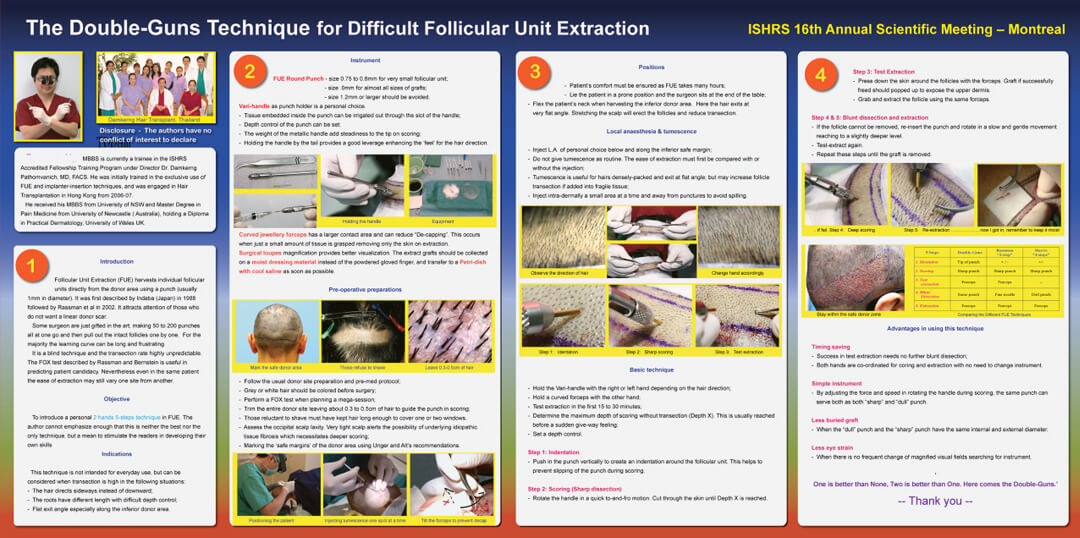
Presented at ISHRS Scientific Meeting Montreal Canada, 2008
Semi-Automatic Mechanism
- Entry angle: Adjusted as the punch penetrates, following the parabolic curvature of the hair follicle.
- Depth control: Determined by tactile resistance
- Orientation: Aligned with natural hair flow
Hand-Switching Technique
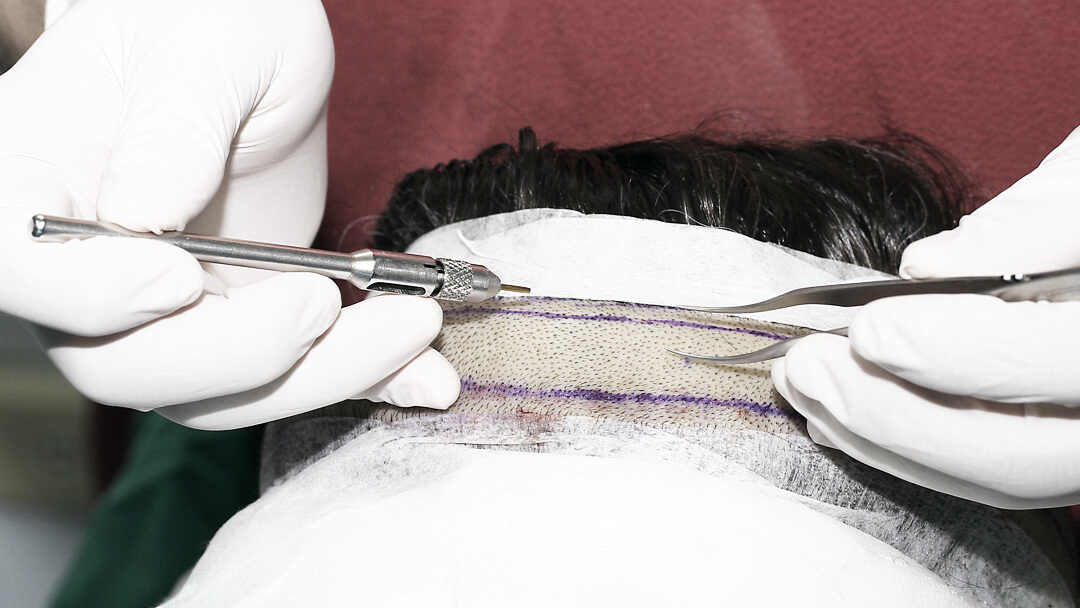
Single-Hand Limitations
Hair angulation is asymmetrical. Using one hand on the contralateral side forces wrist twisting, which may affect:
- Tactile sensitivity
- Micro-adjustments
- Transection rates
Hand-Switch Approach
Switching hands when working on the contralateral donor zone helps maintain:
- Punch alignment with hair axis
- Neutral wrist position
- Tactile feedback
Manual Fail-Safe
- If motorized punch fails, surgeon switches to manual punch
- Procedure continues without interruption
Clinical Applications
- Curly or coarse hair
- Revision procedures (scar tissue)
- High-density zones
- Asymmetric hair angles
Frequently Asked Questions
Q: Is Sequential FUE slower than robotic extraction?
The technique prioritizes graft survival over extraction speed.
Q: Can all practitioners perform hand-switch extraction?
It requires bilateral dexterity. Practitioners need proactice to proficient with both hands.
Q: What happens if the motorized punch fails?
The practitioner switches to a manual punch and continues.
Q: Is Sequential FUE necessary for all patients?
It is particularly useful for curly hair, revision cases, high-density zones, and asymmetric angles.